
NextGen Vanilla
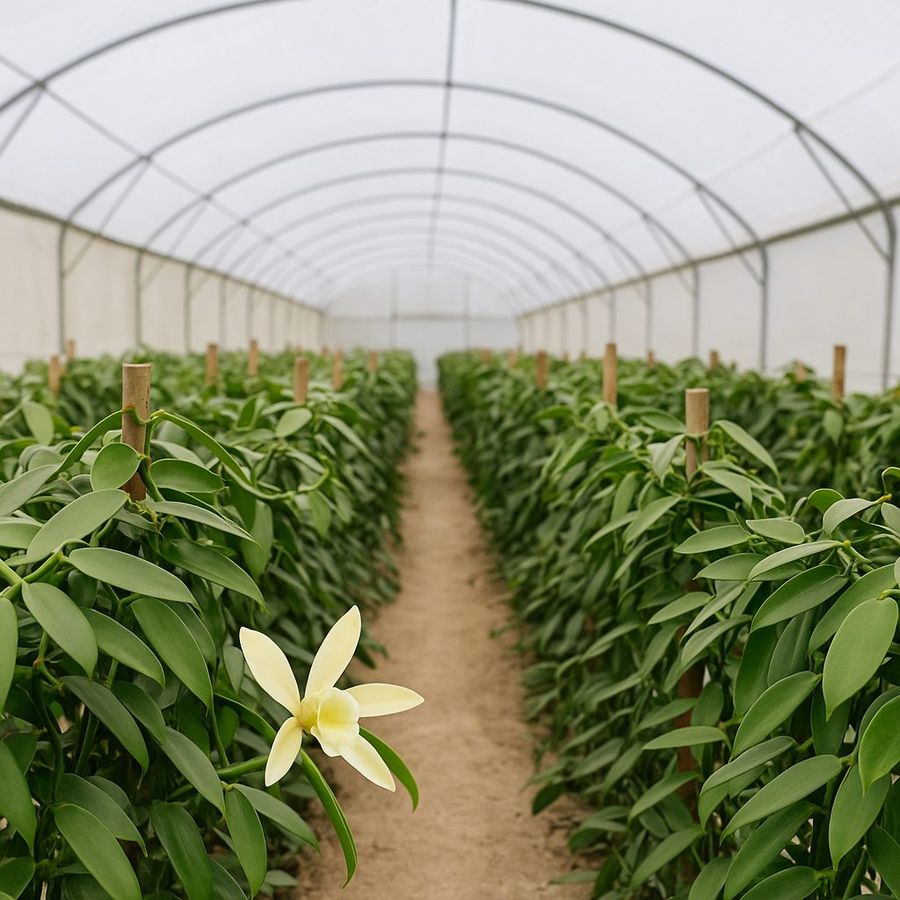
Vanilla is the second most expensive spice on earth, and South Africa imports virtually all of it. We are growing Bourbon Vanilla planifolia under climate control at Botrivier — working towards the country's first commercially grown and cured vanilla.
Why vanilla,
and why here?
Vanilla is a tropical orchid. Conventional wisdom puts it in Madagascar, Indonesia and Uganda — not on the southern tip of Africa, where winters are wet and cold and summers are dry.
That conventional wisdom is about climate, not about the plant. Vanilla needs warmth, humidity, dappled light and something to climb. Those are conditions a climate-controlled growing room — heated, misted, shaded and ventilated to target — can hold far more precisely than open tropical field production can, and holding them precisely is what produces consistent beans. Our pilot facility at Botrivier is purpose-built to do exactly that.
Growing under structure also removes the single largest risk in the global vanilla trade: cyclone exposure in the producing regions, which has repeatedly sent world prices into multi-year swings. A controlled environment in a stable region is a different risk profile entirely.
Grown slowly,
on purpose.
Vanilla vines take several years to reach productive maturity — ours are in that establishment phase now. Each flower opens for less than a day and, without its native pollinator, has to be pollinated by hand — one flower at a time, in the morning, by someone who knows what they are looking at.
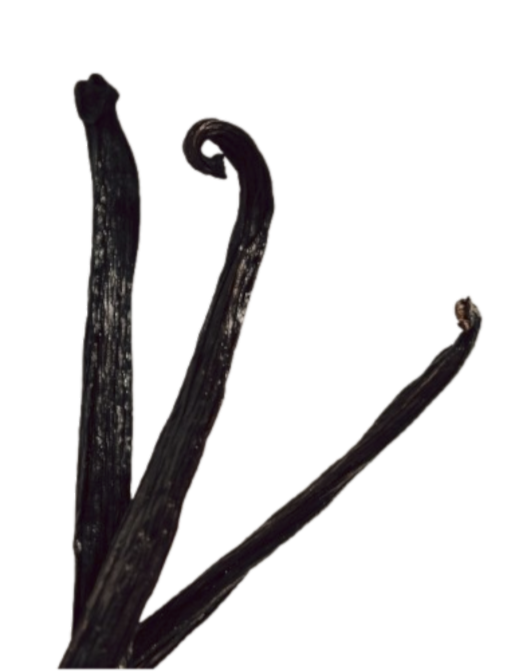
Beans are then left on the vine for months before being harvested green, and only then does the real work start: killing, sweating, slow-drying and conditioning over a period of months. That curing process is where vanillin develops, and it is where most of the difference between ordinary and excellent vanilla is made.
We will cure in-house at Botrivier rather than shipping green beans away. It keeps the value here, and it means the person who grew the bean is the person who judges when it is ready. The cultivation and curing protocols are led by our Technical Director, Dr Rykie van der Westhuizen — a director of Afrinilla South Africa, the country's only active vanilla cultivation research programme.
“Every bean will have been touched by hand at least twice — once to pollinate the flower, and once to decide it was ready.”NextGen Vanilla
Traceable South African vanilla.
First harvests are still ahead of us, and volumes from the pilot will be limited — which is exactly why we are talking now with food manufacturers, distillers, patissiers and extract producers who want provenance they can actually point to.
- Cured beans, graded on length and moisture, from first harvest onwards
- Batch records tied to the vine, cycle and season the beans grew in
- Local supply — no import lead times or currency exposure on landed cost
- Allocations agreed by season, ahead of harvest; early conversations are best
Talk to us about vanilla.
Supply enquiries, sampling and collaboration.